On the morning of August 27, 2026, Yen Hoa Primary School hosted a professional development workshop on “Enhancing teaching strategies for opinion paragraph writing: Supporting or opposing an event or phenomenon.” The workshop brought together the school’s leadership team and teaching staff and featured professional guidance from Assoc. Prof. Dr. Dang Thi Hao Tam, Senior Lecturer at the Faculty of Philology, Hanoi National University of Education, and co-author of the Vietnamese Language textbooks for Grades 1–5.

Learning to think before learning to write
In today’s rapidly evolving digital landscape, language learning is about much more than mastering words, sentences, and writing conventions. It is also about giving students opportunities to think critically, seek out and evaluate information, form their own perspectives, exchange ideas, and express well-founded opinions.
Writing an opinion paragraph to express agreement or disagreement is therefore far more than a conventional composition task. It provides students with opportunities to think before they write, understand why they agree or disagree, support their views with clear reasoning and evidence, and listen to and respect perspectives that may differ from their own.
For students to become confident writers, they first need opportunities to become confident thinkers and communicators.
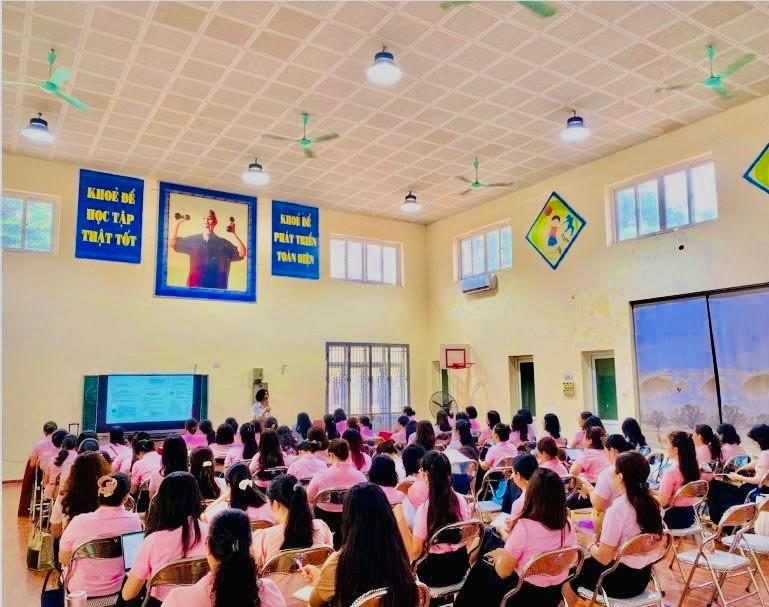
Teachers engaged in Assoc. Prof. Dr. Dang Thi Hao Tam's sharing session on teaching strategies.
From speaking and discussion to independent writing
Under the guidance of Assoc. Prof. Dr. Dang Thi Hao Tam, teachers examined the target learning standards, identified the key competencies students need to develop, and explored common challenges that students may encounter when writing opinion paragraphs.
These challenges include misinterpreting the topic, taking an unclear position, relying on subjective reasoning, using irrelevant evidence, presenting fragmented arguments, and becoming overly dependent on model essays.
Rather than approaching these difficulties simply as writing errors, teachers explored ways to address the underlying thinking processes.
Through relatable, real-life scenarios, teachers had opportunities to think, choose, discuss, reason, debate, and present their views. These activities demonstrated that helping students develop strong opinion writing begins long before they put pen to paper. Students need opportunities to speak, think, discuss, challenge ideas, and defend their own perspectives before they can confidently express those ideas in writing.
The workshop also provided an open and collaborative environment in which teachers shared practical classroom challenges and explored effective approaches to improving learning outcomes for students with different levels of ability.
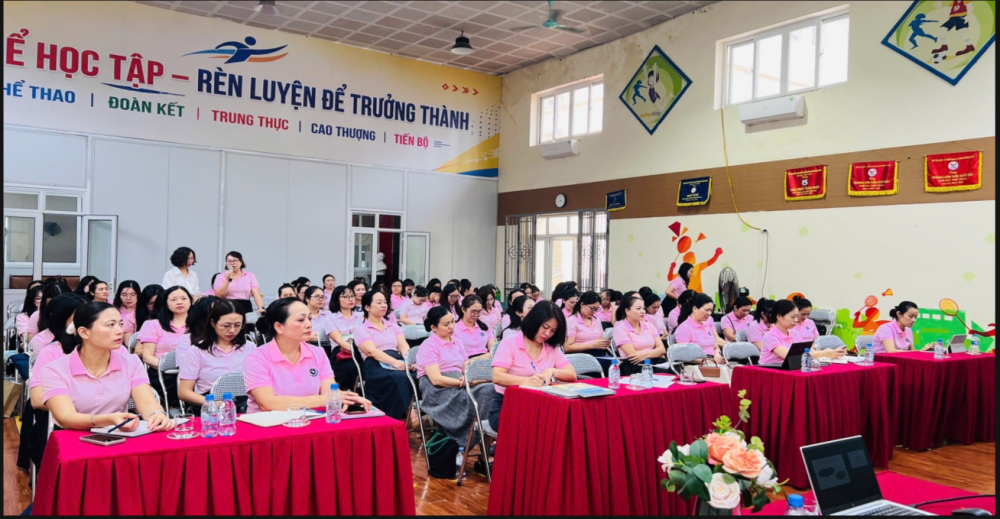
The enthusiastic learning atmosphere among teachers
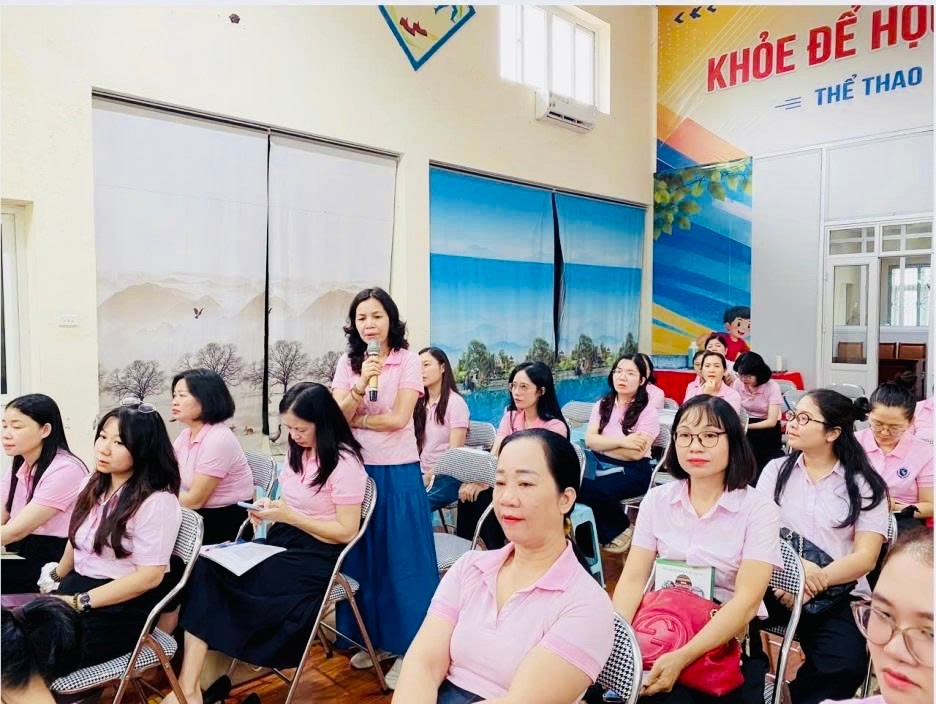
Teachers openly shared their practical teaching challenges and proposed optimal solutions to enhance learning outcomes for students of all levels.
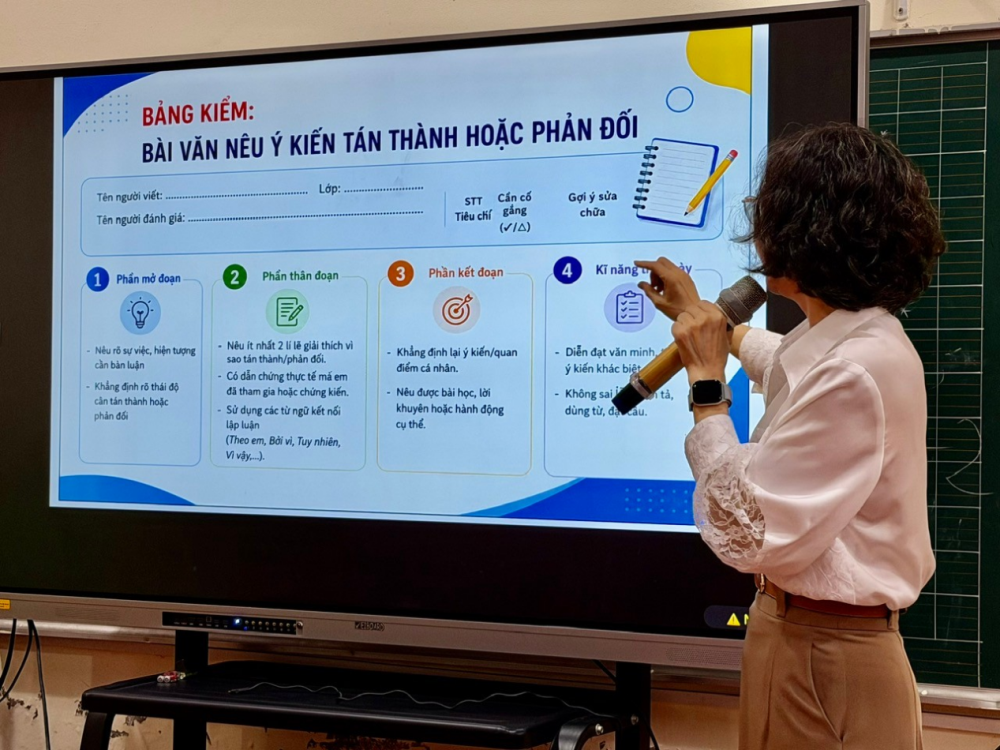
A key strategy presented by Assoc. Prof. Dr. Dang Thi Hao Tam at the training session
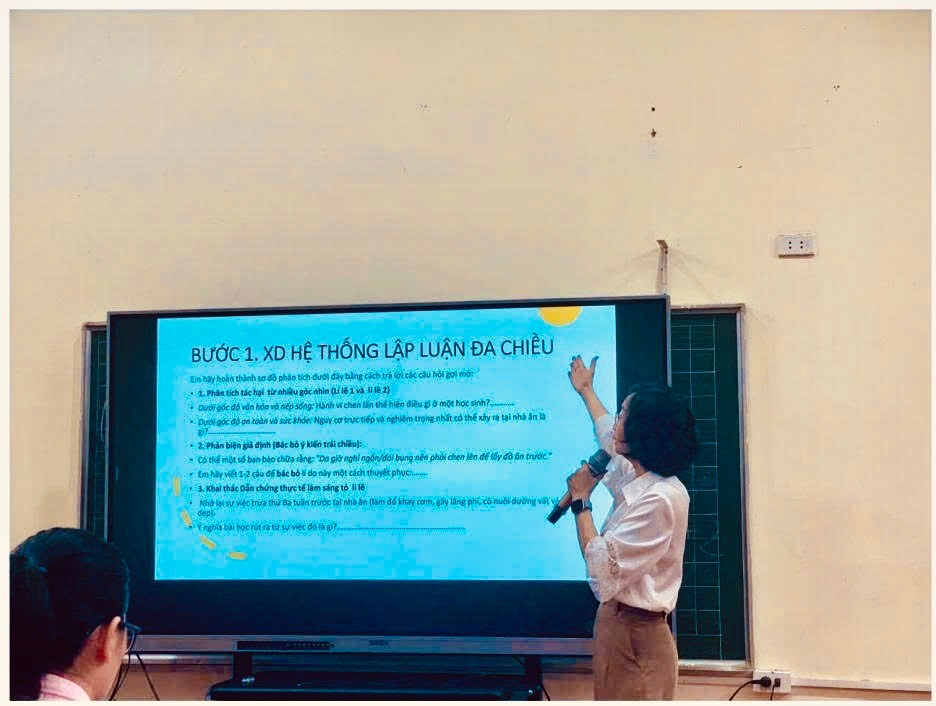
Transforming Vietnamese language learning in the digital age
Technology is becoming an increasingly important part of education, but its role is not to replace students’ thinking. Instead, when used thoughtfully, technology can become a springboard for critical thinking and independent learning.
Visual learning materials, digital platforms, and artificial intelligence (AI) can provide students with opportunities to explore information, evaluate what they discover, and develop their own perspectives.
In this way, Vietnamese language lessons can move beyond the goal of producing well-structured compositions. They can become meaningful opportunities to nurture critical thinkers, confident communicators, and thoughtful digital citizens - students who are able to think deeply, evaluate ideas carefully, express their views constructively, and engage responsibly with the digital world.
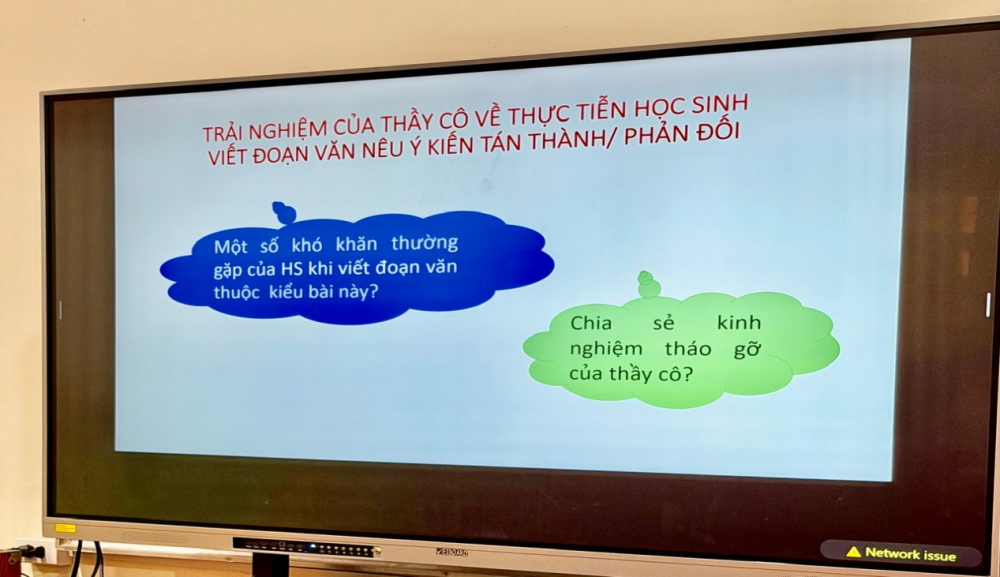
One of the questions raised by the lecturer for teachers to reflect on their classroom reality
Using students’ work to inform better teaching
One of the most practically valuable highlights of the workshop was the analysis of authentic student work.
Instead of focusing only on the question, “Where did the student make a mistake?”, teachers were encouraged to look more deeply:
Why did the student write it this way?
Which step did the student struggle with?
What teaching activities could be adjusted to help the student move forward?
This approach places assessment at the heart of the teaching and learning process. By closely examining students’ work, teachers can identify learning needs and adapt tasks, scaffolding, and expectations to better support different groups of learners.
For high-achieving students, teachers can provide open-ended opportunities that encourage them to explore alternative viewpoints and support their ideas with sound reasoning and evidence. For students who need more support, teachers can provide carefully structured scaffolding, guiding them step by step from verbalizing ideas and organizing their thoughts to selecting appropriate vocabulary, constructing sentences, and completing a coherent paragraph.
The goal is not for every student to produce the same paragraph. The goal is for every student to produce writing that reflects their own thinking.
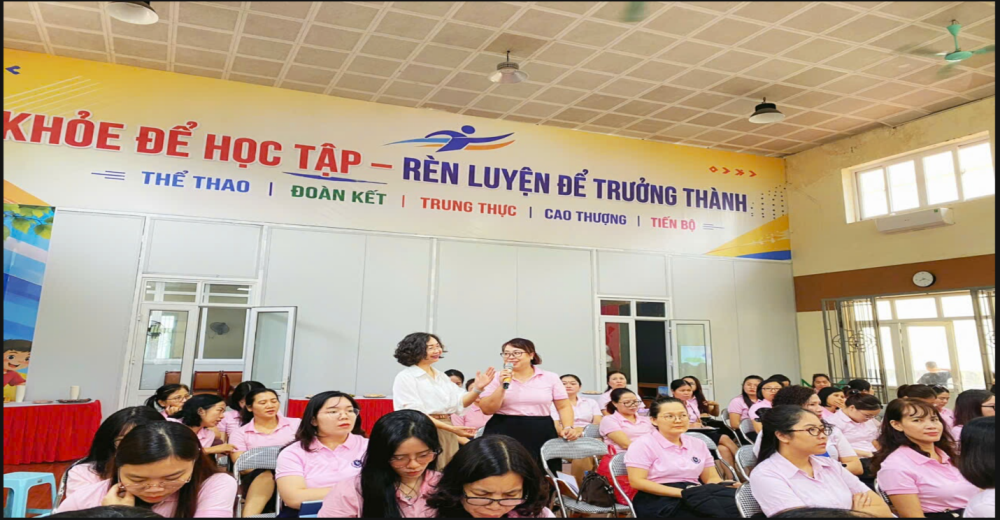
Teachers analyze authentic student work to draw valuable lessons and professional insights from their colleagues.
From writing templates to independent thinking
The journey toward innovating Vietnamese language instruction begins with concrete changes in everyday classroom practice.
It is a journey from rigid writing templates toward independent thinking, while simultaneously nurturing communication skills, critical thinking, and digital literacy.
Although the workshop has come to an end, the insights shared, experiences exchanged, and new teaching approaches explored will continue to be integrated into daily classroom practice.
With a strong commitment to innovation, creativity, learner-centered pedagogy, and the development of students’ qualities and competencies, Yen Hoa Primary School continues its journey toward creating Vietnamese language lessons that help students not only write better, but also think more deeply, speak with confidence, listen attentively, and thrive in an increasingly digital world.
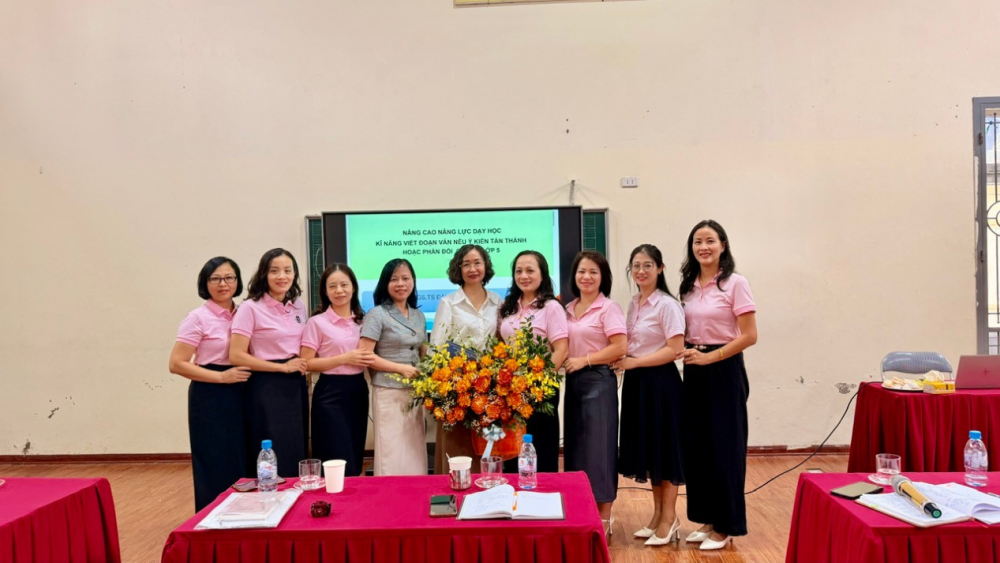
Assoc. Prof. Dr. Dang Thi Hao Tam taking a commemorative photo with teacher representatives of the school
Ultimately, these everyday transformations in teaching are intended to create a learning environment where students feel empowered to think independently, express their perspectives, listen actively, apply critical thinking, and appreciate diversity. Over time, these experiences will help equip students with the resilience, essential competencies, and digital foundations they need to navigate an increasingly interconnected world and grow into confident global citizens.
Credit: Grade 3 Professional Group